Nurse Burnout: What does it look like? How do you manage?
I started my career hoping to be like the 10+ year veterans that I worked alongside and helped educate me when I first started in the ER. I hoped to be the kind of nurse I loved to work with and the kind of nurse new grads could learn from. I was extremely proud to be an ER nurse. My job was my everything to me, and nursing was my identity. I gave so much, adjusted my personal life around the hospital’s needs, and I quickly crashed and burned. The ER is an amazing place, you get to meet people of all walks of life, you learn the true meaning of teamwork, and you make the most amazing friendships. The ER is also a place that takes so much from you. It takes and takes, until there is nothing more. That was my first experience with burnout at a little over 2 years since becoming a nurse. Call it what you want: burn out, compassion fatigue, moral injury…
The point is, it wears you thin.
What is burnout and what does it look like?
According to Psychology Today, “Burnout is a state of emotional, mental, and often physical exhaustion brought on by prolonged or repeated stress.”
It can look a number of different ways for everyone.
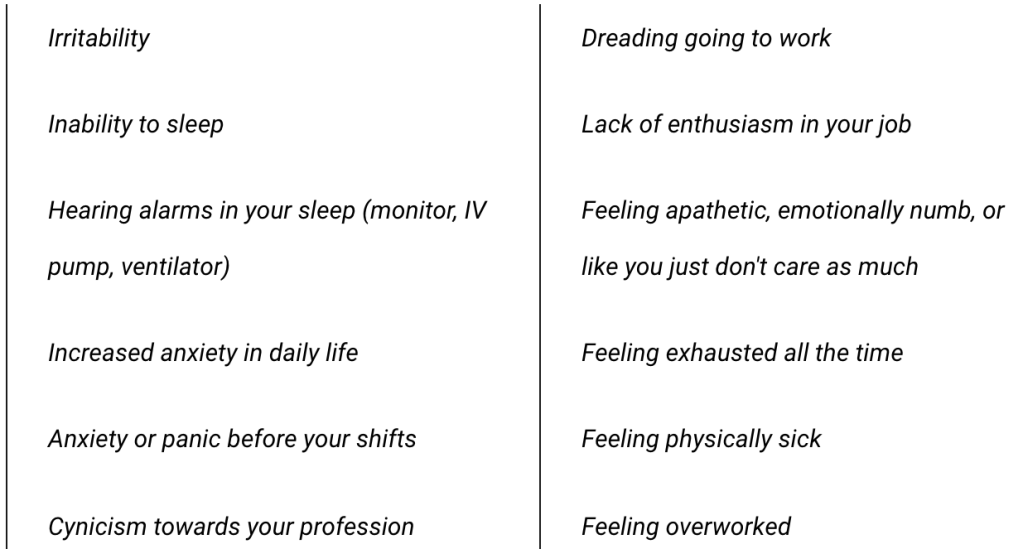
How do you deal with it?
Bottom line, you have got to put yourself first! You can’t pour from an already empty cup. Take care of yourself first because, I guarantee you, no one else will.
Self-care Tips:
- Journaling: For me personally, journaling really helps put things and my thoughts into perspective. Seeing my thoughts on current stressors written out really helps me shift my mindset.
- Physical Activity: Gym, At Home Workouts (YouTube: OTF At Home, Heather Robertson, Yoga with Adriene), even just a nice outdoor walk around you neighborhood.
- Get outdoors: According to Harvard Health article, catching some sunshine will increased vitamin D levels, improve your mood, stress levels, and focus. It can also help heal faster.
- Meditate: Mindfulness practices can help shift your mindset. The Calm app has several guided sessions along with other pretty cool features. The app has free features, but they also have a paid content. They currently have a $40 off coupon for their yearly subscription. Originally costs $69.99.
- Do something nice for yourself. However it looks like… Maybe it’s a massage, or a manicure/pedicure, maybe a facial. Maybe it’s just ordering out breakfast or buying yourself a cup of coffee instead of making it yourself. Maybe it’s sleeping in. Or having a Netflix binge afternoon. Be kind to yourself. Give yourself grace. Treat yourself with the same compassion you treat others.
- Don’t ignore the way you’re feeling. It may seem like a normal thing to you, but trust me, there’s nothing normal about being a nurse. There’s nothing normal about dealing with life and death the way nurses do, especially during a pandemic.
- Find your support system and seek professional help if needed
- The Emotional PPE Project – Free therapy for healthcare workers
- Therapy Aid Coalition – Free and low cost therapy for frontline healthcare workers. Highest fee I saw was $50/session.
- BetterHelp– Currently offering 1 month of free therapy. Use a private browser in case you’ve used other codes or links before.
work Tips:
- Establish and Respect your boundaries: It’s ok to say no. No to staying late, to taking working outside of safe patient ratios, to that extra shift this week. Don’t feel guilty for not working more. It is not your responsibility to staff your unit. Don’t allow your managers to guilt you into “being a team player” and coming in. They’re nurses too. They can also be team players and help on the floor.
- Make your own meals: So many benefits to this. You facilitate eating. (No excuse for not taking your lunch break because you didn’t have time to order.) You save money vs ordering out. You have a more nutritious intake. You can pack pocket snacks that may come in handy on those super busy days.
- TAKE YOUR BREAKS: The hospital is a 24/7 business and you deserve to sit down, eat, and reset in order to continue taking care of your patients. That said, use proper judgement when stepping off the unit.
The point of all this, if you’re experiencing these feelings, know a few things:
- You’re not alone.
- Seek help, whether it be from family/friends, professionally, or both.
- It’s ok to not be ok & it’s ok to seek help.
- You’re not any less of a nurse for this.
 The Nurse Boost